Making CO2 impact visible in Fairphone OS
A team project exploring our love-hate relationship with smartphones against the CO2 emissions their production and use cause.
Overview
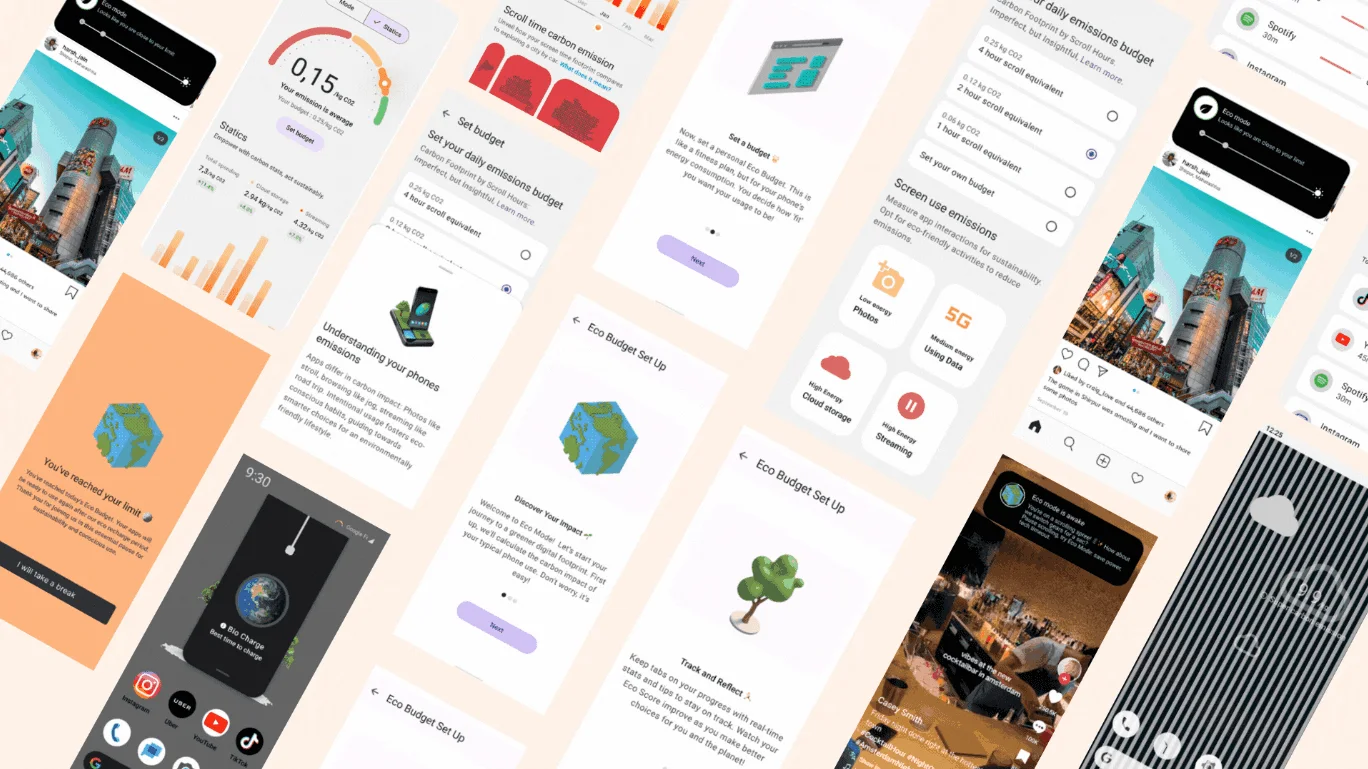
Inspired by Fairphone, a leader in ethical and sustainable smartphone design, our team created UI interventions for Android to raise awareness of the CO2 emissions associated with smartphone usage, highlighting the key contributors, prompting users to act, and giving step-by-step guidance to reduce their footprint. The brief: bridge the gap between personal habits and environmental consciousness, inside the OS itself.
Process
We started with study and investigation: lectures on digitisation and sustainability, and research spanning UX psychology, sustainable UI/UX, benchmarking, IoT, gamification, statistics, carbon emissions and behavioural design. Exploration and ideation followed: a Fairphone company visit to understand their history, situation and vision; a Crazy Eights brainstorm; and creative research including a love/breakup letter exercise, a remote-knowledge game, and posting directly on the Fairphone community for insight from inside. Weekly meetings with Code d'Azur agency helped bring the concept to reality, fine-tuned through peer critique, before moving into wireframes, a prototype, and iterative testing.
Three concepts
01 · Carbon footprint setting
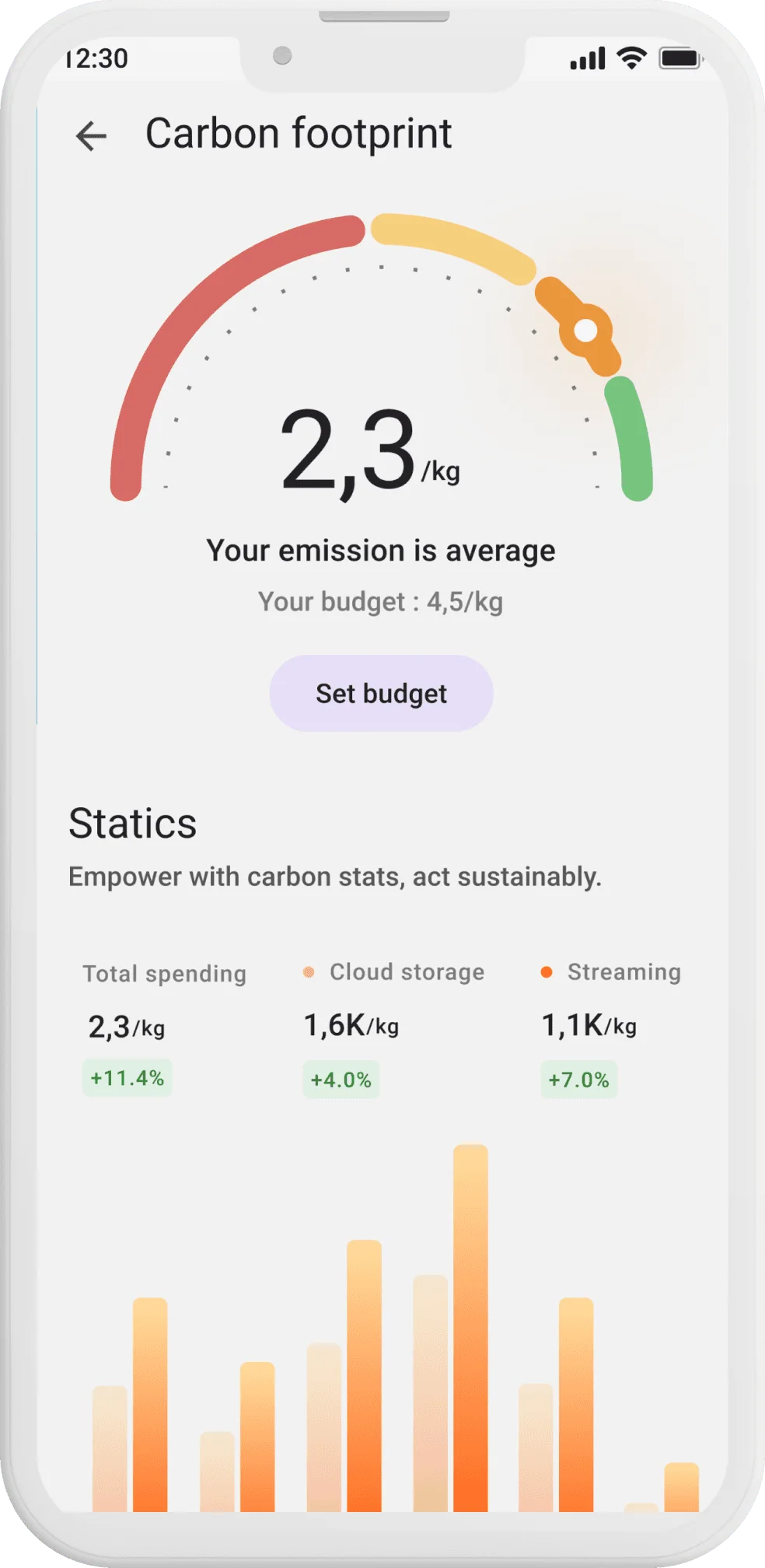
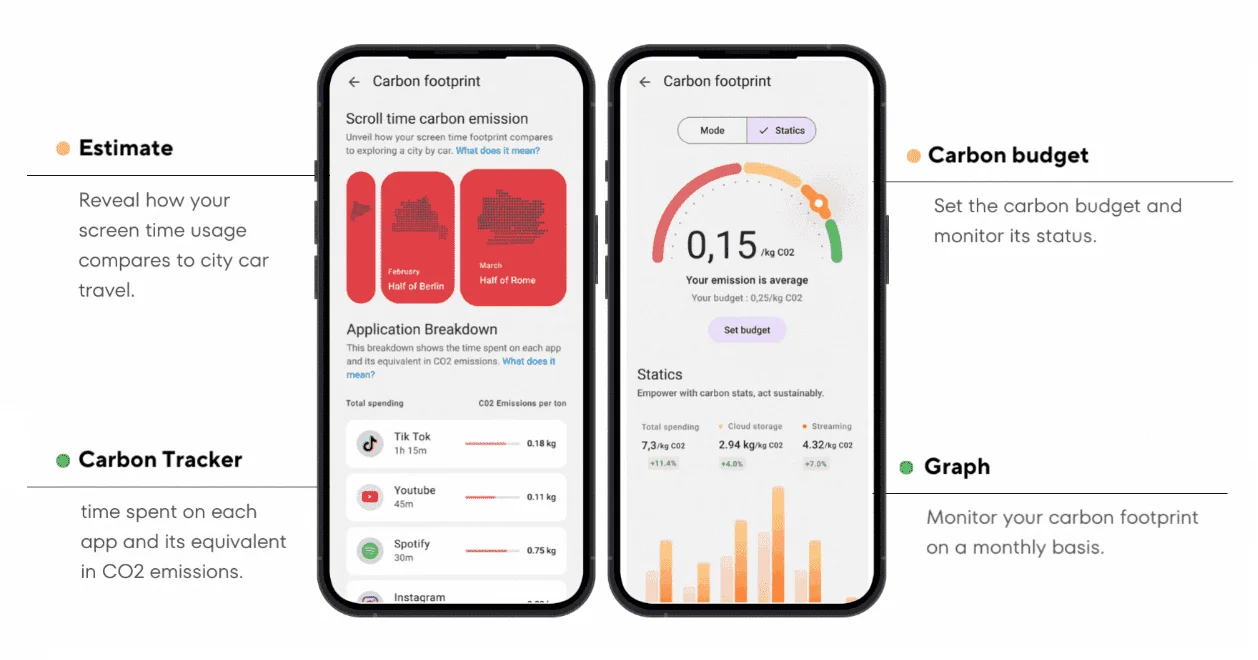
A dedicated screen lets users set a personal carbon budget and track it like a screen-time report: total spending, per-app breakdown, and a monthly bar chart of emissions.
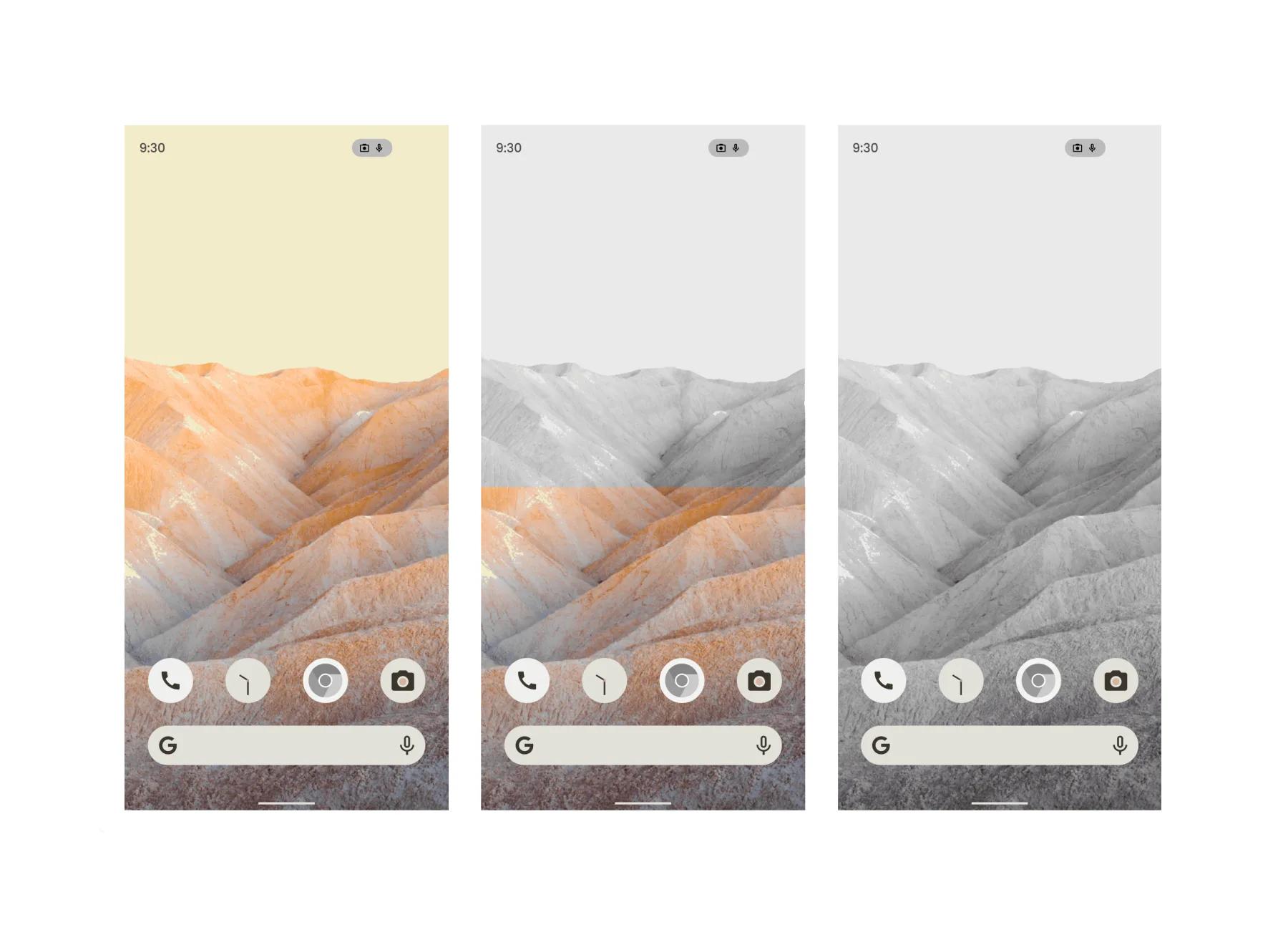
02 · Dynamic home-screen wallpaper
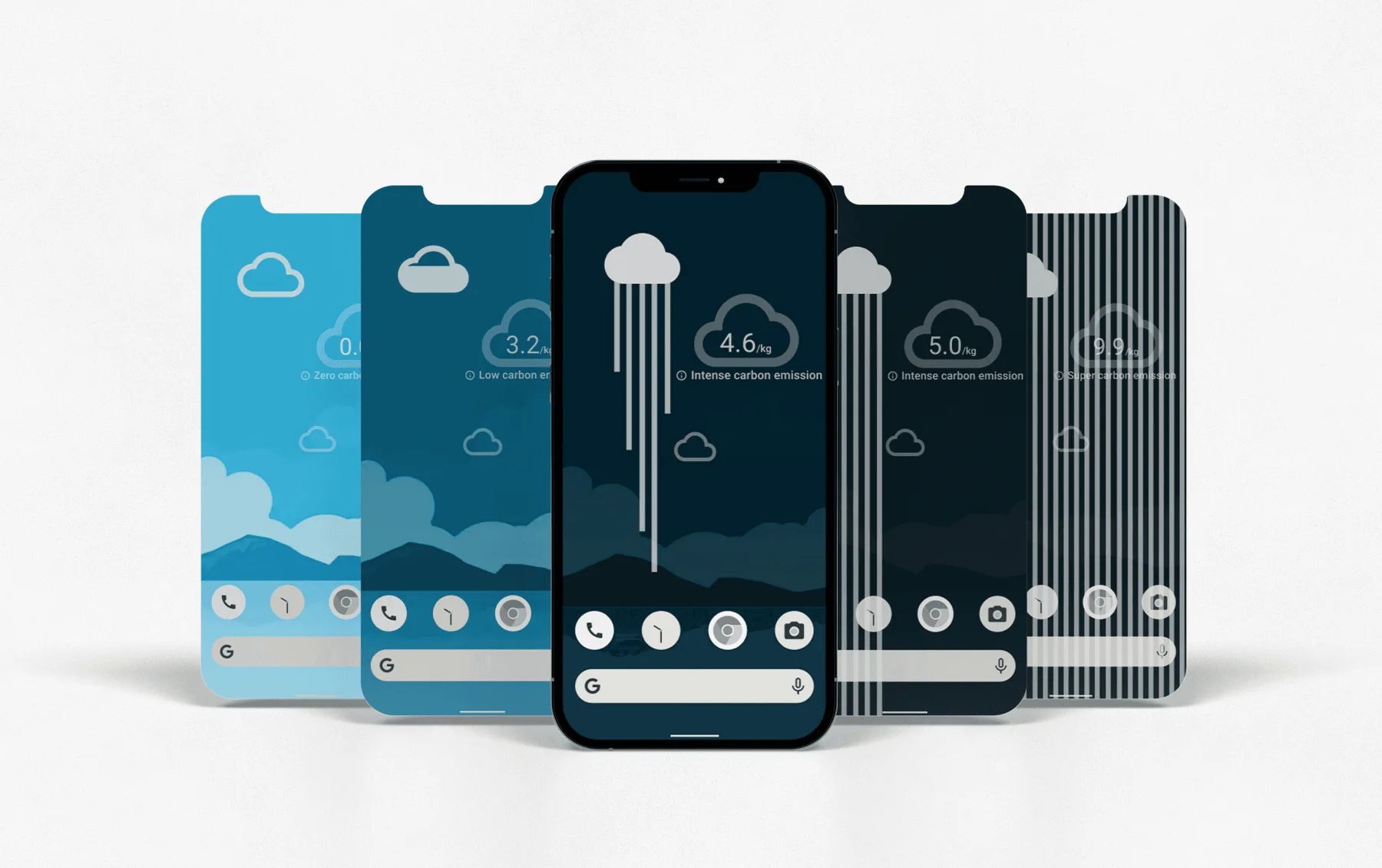
The wallpaper visually depletes as phone usage increases: a landscape that fades from colour toward grey the more it's used, serving as a subtle, ambient reminder to reduce screen time, set up through the same eco-budget onboarding as the footprint setting.
03 · Eco limit nudge
This UI alerts users sequentially as phone use climbs: a cloud rains over the lock screen, indicating the CO2 emitted, growing darker as usage increases. It's an intentionally extreme approach that, at its limit, takes over the whole screen.